Blog About a Computer Made of Living Brain Cells… Let That Sink In.
Cortical Labs is building computers using real human brain cells that can learn, adapt, and even play games like Doom. This is not AI. This is something else.
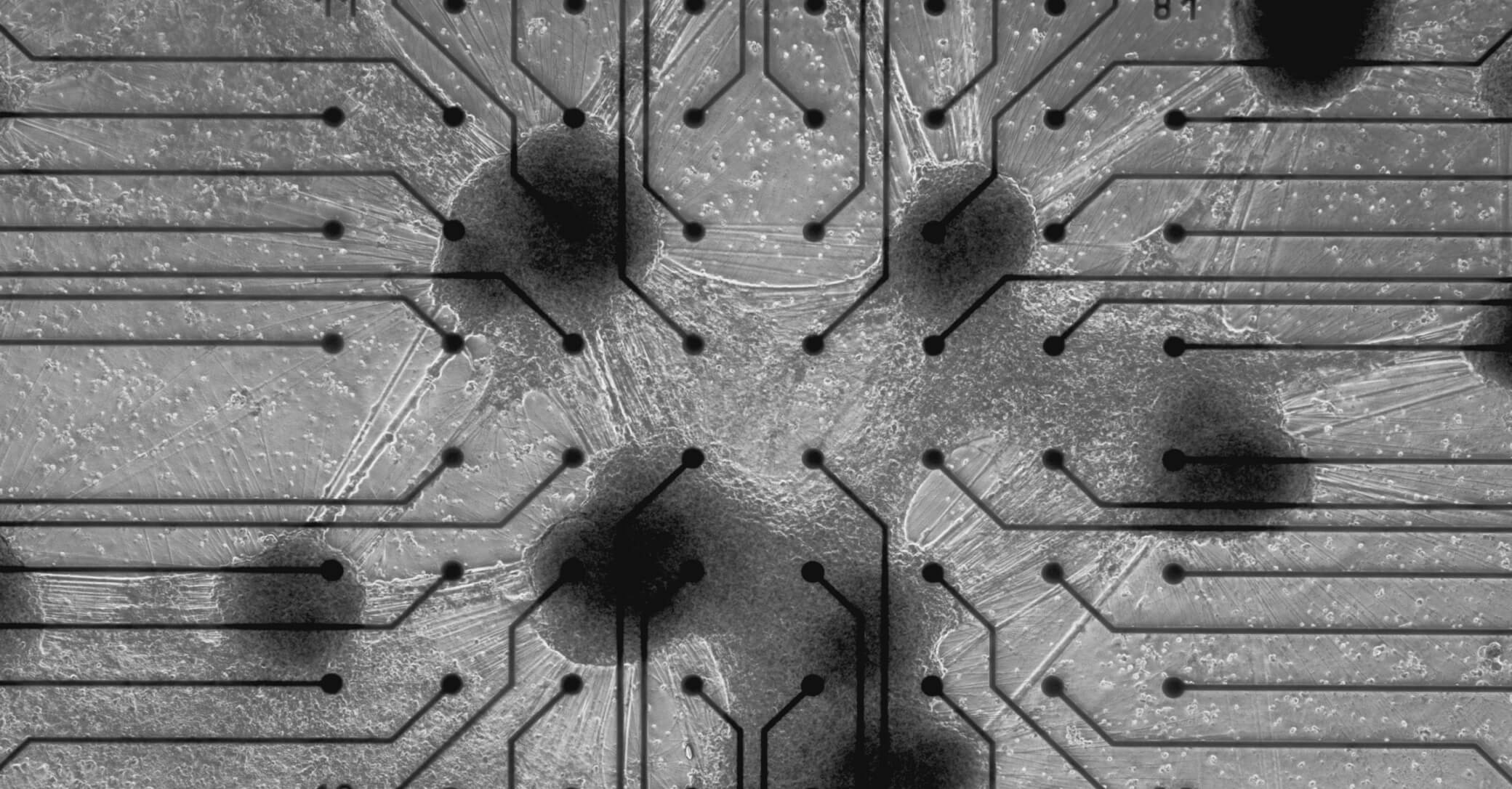
( Neuron on a chip. Image Credit: Cortical Labs )
CHAPTER 1: The Misunderstanding of Intelligence
I came across Cortical Labs randomly, and at first I thought it’s just another AI company trying to build something around machine learning or neural networks. But as I started reading deeper, I realized this is not even in the same category as typical AI companies.
Most companies today are trying to copy how the brain works. Cortical Labs is not copying anything. They are directly using real neurons, real biological brain cells, and making them interact with computers. This is where things started getting really interesting for me.
CHAPTER 2: Not Artificial. Not Even Trying To Be.
Cortical Labs is an Australian biotech company working in a field called “biological computing.” Instead of writing code to simulate intelligence, they grow living neurons in a lab and connect them to hardware. These neurons are placed on silicon chips, and through electrical signals, they can receive inputs and send outputs, just like a brain interacting with the environment.
CHAPTER 3: When Cells Start Learning
The most famous thing they built is called DishBrain. In this system, they took neurons grown from human stem cells and mouse cells and connected them to a setup where the neurons could play a simple game like Pong. Now this is not like coding a game-playing bot. Nobody told the neurons what to do. They were just given feedback signals. Over time, they adapted their behavior to improve performance.
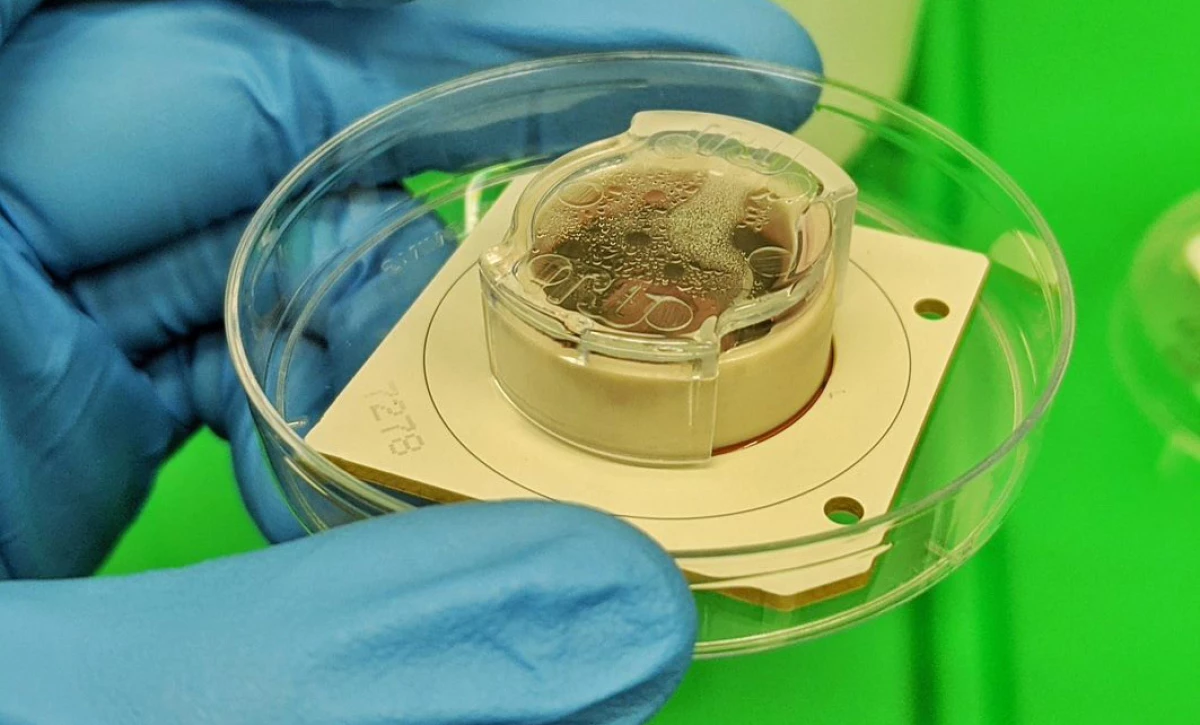
( Cortical Labs' dishbrain after a test session. Image Credit: Cortical Labs )
This is what actually blew my mind.
We are so used to thinking that intelligence in machines comes from code, algorithms, and data. But here, intelligence is emerging from living cells that are not “programmed” in the traditional sense. They are learning the way biological systems naturally learn, by reacting to feedback and trying to reduce unpredictability.
When I understood this properly, I had to pause. Because this changes the whole direction of computing.
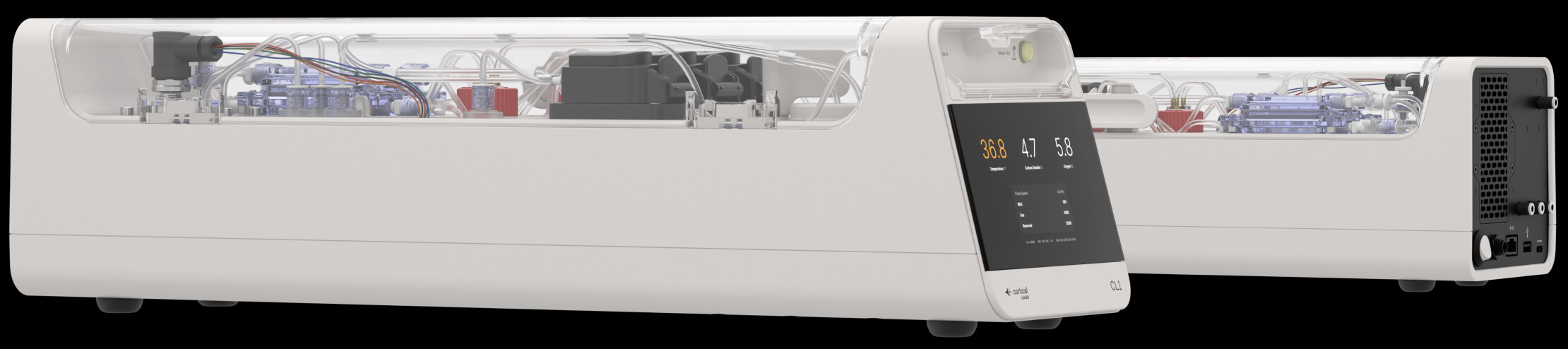
( CL1 computing device. Image Credit: Cortical Labs )
CHAPTER 4: The Machine That Is Alive
Then I read about their product called CL1, and things got even more serious. CL1 is basically a biological computer. Inside it, there are living neurons that are kept alive using a controlled environment, like temperature, nutrients, and oxygen. These neurons are connected to electrodes that allow communication between software and the biological network.
So instead of running your code on a CPU or GPU, you are interacting with living neural tissue.
Think about that for a second.
We have been optimizing silicon chips for decades, trying to make them faster and more efficient. But the human brain, which runs on biological neurons, is already far more energy efficient and adaptable than any computer we have built. Cortical Labs is trying to tap into that directly instead of reinventing it.
CHAPTER 5: Renting Neurons Like Servers
Another thing they introduced is something like cloud access to these systems. You don’t even need to own the hardware. You can remotely access these biological systems and run experiments. It is almost like AWS, but instead of renting servers, you are using living neurons sitting in a lab somewhere.
I actually tried to explore this myself and see if I could deploy some code on it, just to understand how it feels in practice. But right now, one CL1 unit, you can roughly imagine it like an EC2 instance (not exactly, but just for understanding), costs around $2000 per month. That is seriously expensive. And they don’t offer any free trial either, which at first feels disappointing, but honestly makes sense considering you are not just using compute, you are literally using a maintained biological system.
This concept felt both exciting and slightly uncomfortable at the same time.
CHAPTER 6: From Pong to Doom
They also pushed their experiments further beyond Pong. Their systems have been tested with more complex environments like Doom ( watch video here ). Of course, the performance is nowhere near a human or even advanced AI, but that is not the point. The important part is that these neurons are capable of learning patterns and improving responses over time in a dynamic environment.
CHAPTER 7: Real World Impact
When I started thinking about applications, it became clear that this is not just a cool experiment.
In drug discovery, for example, testing on real human neurons could give much better insights compared to simulations or animal testing. It can help understand how actual human brain cells react to different compounds. That can potentially speed up research and make it more accurate.
In neuroscience, this opens a completely new way to study how learning and intelligence actually work. Instead of observing the brain from outside, researchers can directly interact with simplified neural systems and test hypotheses in real time.
And in the field of AI, this raises a very uncomfortable question. If biological systems are naturally better at learning and adapting, then are we going in the wrong direction by only focusing on artificial models?
At the same time, there are ethical questions that cannot be ignored. When you are working with living neurons, even if they are in a lab dish, you have to ask where to draw the line. Can such systems ever become conscious in some form? If they do, what responsibility do we have? Right now, scientists say these systems are not sentient, but the discussion itself shows how new and uncertain this space is.

For me, the biggest shift was not technical. It was conceptual.
FINAL CHAPTER: The Future Isn’t Artificial
For years, we have been trying to build machines that can think. But what Cortical Labs is doing is different. They are creating systems that already have the fundamental properties of thinking, because they come from biology itself.
This is not just an improvement over existing technology. It feels like a completely new direction.
After reading about them, I did not feel like I had learned about a company. It felt like I had seen an early version of something that could redefine computing in the future.
And honestly, it left me with one strong thought.
Maybe the future of intelligence is not artificial.
Maybe it is biological.